


Qatar: The Censors’ Preferred Host
Qatar: The Censors’ Preferred Host. The shameful situation and unpleasant news about the Qatar World Cup are increasing, but it’s too late to turn back now.
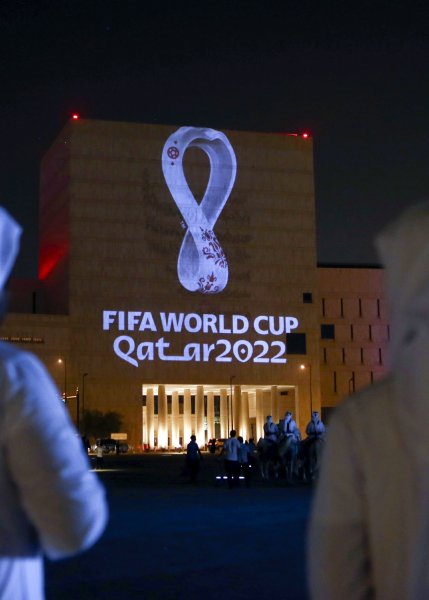
The 22nd World Cup is being held in Doha, Qatar. The opening ceremony welcomed athletes ready to compete for the championship title in one of the world’s most prestigious sporting arenas with a display of lights and colors. However, all this glitz and glamour were not enough to soften the controversies surrounding the decision to host the event in a country where human rights are continuously violated.
Among these issues is the lack of transparency regarding the conditions of workers, who are mostly migrants, in the stadium construction sites. It’s also noteworthy that in this country, homosexuality is considered a crime and gender equality is not even a topic of discussion.
This is the first time the tournament is being held in a country in the region, and the anomaly of this World Cup in Qatar starts with the timing. Unlike usual, it is being held in the fall due to the host country’s weather conditions.
The World Championship is underway and is causing numerous problems for everyone, from insiders to fans. The discontent was acknowledged by Sepp Blatter, the former FIFA president, who admitted that the global football governing body made a serious mistake at the time.
But what is being talked about these days goes beyond just a mistake. In fact, we are facing real corruption, with multiple investigations underway to clarify all aspects of the matter. These investigations focus on the criteria and standards based on which the World Cup hosting was awarded to a country like Qatar.
A Kick to Human Rights
With a population of less than three million, Qatar is the smallest country ever to host the World Cup, a logistically complex event that attracts a large number of visitors and requires extensive and diverse infrastructure to accommodate them.
To prepare for the kickoff, the Qatari government needed to build stadiums, hotels, and highways, employing a massive workforce of migrant workers who make up about 90% of the country’s labor force to start the project.
According to a 2021 assessment by The Guardian, more than 6,500 migrant workers from Bangladesh, India, Nepal, Sri Lanka, and Pakistan have died due to inhumane conditions and exhausting labor in construction sites since the World Cup was awarded in 2010.
These numbers align with the United Nations reports on injuries and environmental impacts from the football event. A situation that, along with accusations of corruption, environmental damage, and gender discrimination, cannot help but be controversial, and as soon as the tournament starts, we witness initiatives to express opposition to the conditions of the event.
The Danish national team wears jerseys with faded logos because the manufacturer, Hummel, doesn’t want to be seen in tournaments that have cost human lives. Meanwhile, eight teams were not allowed by FIFA to wear rainbow armbands on the field to support LGBTQ rights, as it was considered a political gesture.
The Most Expensive World Cup Ever
The Qatar World Cup, with a record $220 billion cost, is the most expensive in history. This figure is actually higher than the total cost of all World Championships up to 2018 and 15 times more than the 2014 Brazil World Cup. To recoup such enormous expenses, ticket prices have increased significantly compared to the last World Championship in Russia.
For the small Gulf country and in continuation of a strategy Doha has pursued for years, the World Cup could be an opportunity to steer the country’s economy towards tourism and, in general, gain visibility and credibility on the international stage. However, due to the numerous controversies surrounding Qatar’s approach to various issues, including dress codes for men and women, banning alcoholic beverages, and dealing with Iranian spectators opposed to the Iranian government, the country’s international image has been significantly tarnished.
In recent years, Doha has hosted important negotiations with complex parties such as Iran and the Taliban in Afghanistan. It should also be mentioned that today, Qatar’s abundant natural gas resources make it a more valuable partner for Europe in the energy crisis.
Soft Power or Sportswashing
Accusations of sportswashing, meaning using sports to improve a country’s image, have been met with skepticism and are considered the toxic fruit of a post-colonial and racist Western mindset.
Al Jazeera’s Alarabi Sadeghi points out that it’s unclear why there is so much fuss about Qatar when human rights are not observed in other countries that have previously hosted the World Cup. This view was welcomed by FIFA President Gianni Infantino, who said at the opening press conference in Doha, ‘Today I feel Qatari, I feel Arab, I feel African, I feel gay, I feel disabled, I feel like a migrant worker.’
Infantino said he is unable to understand many of the criticisms raised in recent weeks by Western countries, which he described as unilateral moral lessons and pure hypocrisy. In a nearly hour-long speech, the FIFA president, which a Sky Sports reporter described as reminiscent of Donald Trump’s speeches, expressed surprise that no one sees Qatar’s progress in recent years and noted that he does not want to defend Qatar but rather football. According to him, the World Cup, which started on November 20, will be the best in history.
European Union’s Reaction to the World Cup
The European Parliament condemns the death of thousands of migrant workers during the preparations for the 2022 World Cup, especially during the construction of the stadiums where the matches are held.
The European Chamber called on FIFA and Qatar to compensate all victims related to the preliminary stages of the football championship preparations and pay their families. In another point emphasized in Strasbourg, European Parliament representatives, through a resolution that was passed, describe corruption in FIFA as systematic and deeply rooted and express regret over the lack of transparency that characterized the selection of Qatar as the host country.
The European Union also calls on member states, particularly Germany, France, Italy, and Spain, to pressure UEFA and FIFA to commit to issues such as introducing democratic and transparent procedures for awarding the hosting of world football championships. According to the resolution text, Qatar won the World Cup bid amid credible corruption allegations.
European Parliament representatives said that to protect athletes and fans and end the practice of so-called sportswashing, international sporting events should not be awarded to countries that violate basic human and human rights and where systematic gender-based violence exists.
They ultimately condemned the abuses by Qatari authorities against the LGBTQ community, including the use of national laws that allow their detention for six months before any trial. The resolution calls on Qatar to take measures to ensure gender equality and strive to strengthen and improve the status of women in the labor market.
