



The shadow of poverty over the people
The shadow of poverty over the people
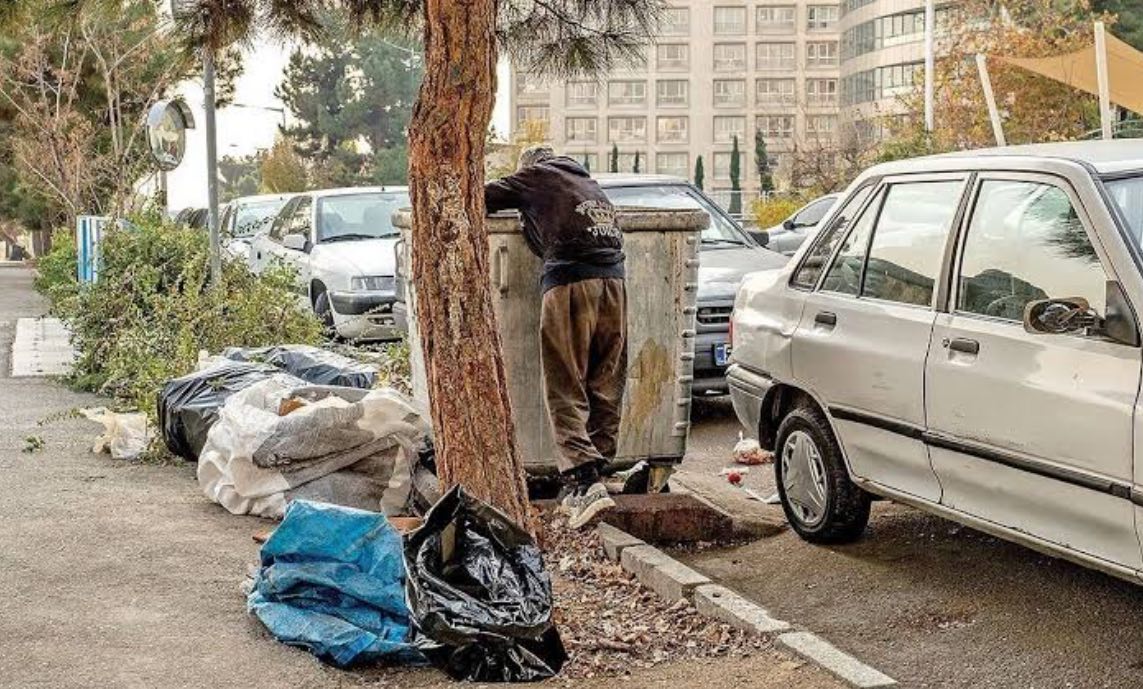
The Iranian Statistics Center says 27% of Iranians live on a daily income of two dollars, meaning one-third of Iran’s population cannot afford the basic necessities of life. The Global Hunger Index (GHI) also shows that 65% of Iran’s population suffers from malnutrition.
Meanwhile, Iranian citizens say that with the jump in the dollar’s price to the 80,000 toman channel, the prices of essential goods have also increased several times, forcing them to remove many other items from their expense baskets. The Statistics Center’s report is related to January when the dollar’s price was around 79,500 tomans. Today, February 7, the dollar rate is around 85,000 tomans. With this in mind, it can be said that the income of the same 27% of Iranians has become less than two dollars a day.
Some citizens in various cities of Iran have explained to Radio Farda about the prices of items these days and how to provide them. The names of individuals have been mentioned pseudonymously in this report at their request.
Food items that have no substitute
Low-income families are forced to replace cheaper items with each price jump in food items. They replace chicken with red meat, eggs with chicken, and finally legumes and potatoes with eggs. The latest report from the Iranian Statistics Center shows that more than one-third of the food items used by Iranian households have experienced a price increase of 40 to 103% compared to January last year. The majority of this price increase has been in legumes and fruits.
Of course, it should also be noted that the Statistics Center’s report is based on official prices, and for example, the price of each kilo of potatoes is considered 32,000 tomans, while in the fruit and vegetable market, potatoes are offered at 36,000 tomans. Ms. Mahya, who lives in eastern Tehran, has also bought potatoes for 60,000 tomans per kilo. She tells Radio Farda that after the dollar’s price increase, prices have grown unbelievably. Now a sandwich with one egg, one tomato, and one bread costs 20,000 tomans.
If a four-member family wants to eat only egg sandwiches, they have to spend half of their income. The rent of the apartment she lives in, in eastern Tehran, is 20 million tomans. She says the real estate agency has said the rent for this 60-meter apartment is now 40 million tomans. She has eliminated personal purchases from her life and is now worried about next year because, according to her, prices are expected to rise again, especially for Nowruz and after that.
However, Massoud Pezeshkian, the president, acknowledged the current bad situation of people’s livelihoods and the high prices as unacceptable on Monday, February 4, and said that some economic problems are beyond the government’s control. Despite this admission of inability, he promised that the government would plan good actions with the aim of providing for people’s tables before Nowruz 1404.
When food costs replace education expenses
Prices are generally higher in Tehran, but in less affluent cities, the economic situation and pressure on weak households are not less. Mr. Mansour, a resident of Zahedan, supports several poor families. He says we used to pay a monthly subsidy for the education or food of some weak families, and alongside that, we provided some food items as a support package. With the increase in prices, our donated goods basket has become smaller and smaller, and we can no longer afford to pay educational subsidies. These food items include macaroni, soy, tomato paste, and oil, and do not have more variety.
Ms. Farnaz, who is active in a charity group in Abadan, is responsible for identifying women who are heads of households. She says about the situation of these families that for a long time, education has been our second priority in addressing less privileged families, and our focus is on their food. Some families had previously replaced many food items with legumes, but the price increase cut even that. According to Farnaz, in some cases, families have nothing to eat, she says this sentence with emphasis.
The elimination of meat and eggs as sources of protein has caused at least 65% of the country’s population to suffer from malnutrition. The Global Hunger Index (GHI) in 2024 shows that Iran is positioned between Lebanon and Saudi Arabia. Lebanon was involved in military conflict during the period under review, but Iran has become engaged in malnutrition in conditions of peace.
The Tehran-based newspaper Etemad recently wrote in a report that the real number is likely higher than this index. Other studies show signs of malnutrition such as moderate weight deficiency of 6%, mild weight deficiency of 25%, severe stunting of 3%, moderate stunting of 8%, mild stunting of 21%, severe wasting of 1%, moderate wasting of 5%, and mild wasting of 20% have been reported among Iranians.
Ashkeneh returned to the Iranian table
Ahmad Alamolhoda, the representative of the Supreme Leader of the Islamic Republic in Khorasan Razavi province and the Friday Imam of Mashhad, said in August 2012, during Ahmadinejad’s second government, in response to one of the surges in chicken prices and its scarcity, that people’s food facilities are not supposed to always be the same. Mashhadis, have you forgotten Ashkeneh with fried onions and that life? Now, after a decade, this has become an unavoidable part of the life of a segment of the people, with the difference that now with the high price of potatoes, they have been forced to remove even that from Ashkeneh.
Mr. Afshar lives in the Khavaran area, a point in southeast Tehran where the price of many items is slightly cheaper than in central Tehran. He says the price of each kilo of meat is 600,000 tomans and each kilo of chicken is 90,000 tomans. With this situation, I cannot afford to buy. Early this February, Ali Asghar Maleki, the head of the Mutton Union, also confirmed that with the price increases that coincided with the dollar’s price increase, the market has experienced a decline and silence.
It seems that not buying meat is not limited to that 27% who have a daily income of less than two dollars and includes a wider segment of society. A situation that has made meat a luxury item, and only a part of Iranian society can afford to buy it. Mr. Afshar’s colleague is a worker with a monthly salary of 10 million tomans, who is also a tenant. Afshar says a large portion of his salary goes to rent, and he lives on one or two million tomans a month, that too with bread, legumes, and potatoes. However, for some time now, they have also eliminated potatoes.
According to Afshar, he has long replaced meat and chicken with chicken bones and feet. The price of each of these is 30,000 and 25,000 tomans per kilo. One of Afshar’s colleague’s main meals is Ashkeneh, which he has been eating without potatoes for some time. However, he refers to it as water and tomato paste. Afshar says many workers in our area use these food items. The Global Hunger Index 2024 analysis shows that due to the nutritional situation, 53% of Iranian children are stunted due to chronic malnutrition. The upward trend in prices, especially the dollar rate, continues, and senior officials of the Islamic Republic are not unaware of the economic pressures affecting Iranian families.
Mohammad Bagher Ghalibaf, the Speaker of the Islamic Consultative Assembly, recently said in a session of the heads of the powers that people are crushed under economic pressures and, out of respect for Islam and religion, they do not say anything to us. The revolution was for the religion and the world of the people, and we must succeed in both areas. Unfortunately, our record in economic matters is not acceptable. Ali Khamenei, the Supreme Leader of the Islamic Republic, said in a meeting with the commanders of the Revolutionary Guards in August 2023 that we have passed a large part of the path despite the steep slope and are close to the peaks.
But data from the Statistics Center shows that Iran’s national income per capita in 2023 faced a 20% decline compared to 2011. This report also showed that in 2023, Iran has become more of a poor country than before, a poverty that is now more visible in most economic indices and data.
