

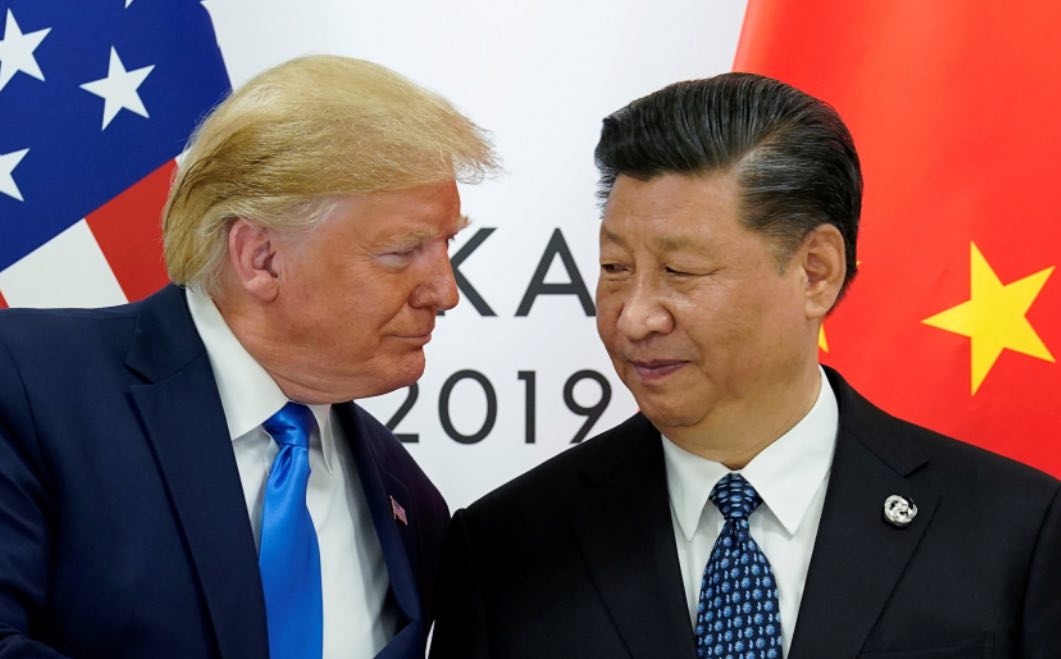
Trump Draws a Line for China
Trump Draws a Line for China: Donald Trump, the Republican presidential candidate of the United States, said he would impose more tariffs on Chinese goods if China enters Taiwan.
The former U.S. president said in an interview with the Wall Street Journal, ‘My point is, if you enter Taiwan, I have no choice but to tax you 150 to 200 percent.’
According to Sharq, in response to the question of whether he would use military force if China besieges Taiwan, Trump said it wouldn’t come to that because Xi Jinping, the President of China, respects him.
In this interview, Trump said, ‘I had a very good relationship with him. I don’t have to use military force because he respects me and knows what a tough guy I am.’
China considers democratic Taiwan as part of its territory and has never ruled out using force to capture the island.
Taiwan strongly protests China’s sovereignty claim. Trump, in part of his remarks addressing voters in the crucial November elections, where he is set to compete with Kamala Harris, the Democratic Vice President of the United States, talked about his plan to impose comprehensive tariffs of 10 to 20 percent on almost all imports of the country and also impose tariffs of 60 percent or more on Chinese goods, an action he said would boost U.S. domestic production.
During Trump’s presidency from early 2017 to early 2021, his aggressive approach towards China manifested in tariffs that led the two countries into a trade war, shaking markets worldwide.
In an interview with the Wall Street Journal, Trump also talked about Russia’s aggression towards Ukraine and reiterated that if he were in power, Vladimir Putin, the President of Russia, would not have attacked.
The Wall Street Journal quoted Trump about his previous meeting with Putin, writing, ‘I told Putin, we have a good relationship, Vladimir, if you go after Ukraine, I will hit you in a way you won’t believe, right in the heart of Moscow.’
On the other hand, the Canadian federal government says businesses can apply for exemptions from the new tariffs on electric vehicles, steel, and aluminum from China.
Ottawa says these facilities are provided to compensate for the challenges Canadian industries face in adjusting their supply chains.
Canadian Prime Minister Justin Trudeau announced on August 26 that Canada would impose tariffs of 100 and 25 percent on electric vehicles, steel, and aluminum from China.
The tariff on Chinese electric vehicles was implemented on October 1, but the tariffs on steel and aluminum will be applied from October 22.
The government says it will review applications from businesses that rely on imported products and cannot source them elsewhere, or those that have contracts signed before the tariffs were announced, or have other special conditions.