
What strategy does Russia have regarding Iran
The focus on Russia for writing recent notes has an obvious reason; part of the reasons is clear. Russia is a global military power. It is not a major economic power but has the capacity to shape and control events across continents alongside the United States.
I have deliberately separated China from this analysis and will explain it in my next article. Other powers are less known, but they are not less important. Iran is at the center of what I have labeled the Northern Crisis.
Its government has a geopolitical advantage in protecting its borders, and it shows this duty like many countries by deploying armed forces and weapons or sometimes apparently stationing troops.
These activities pose a potential threat to neighboring countries to the east, Pakistan, Afghanistan, and Turkmenistan, as well as to Turkey in the northwest. The important point for me is that it can also threaten Russia.
Iran’s goals and capabilities are often unclear, but in the complex world of strategy, one must be prepared for the worst conditions, and in this region, the worst is always happening.
Among Iran’s neighbors, Russia alone is in a geopolitical position to operate throughout the region.
Iran knows this and is therefore forced to act against Russia. They have slightly better relations than before and do not seem to have stronger cooperation.
Of course, Russia has announced that it will counter any attack on Iran’s nuclear facilities, a clear effort to get closer to Iran and scare the West.
Meanwhile, Russia regularly sells drones to Uzbekistan, Kyrgyzstan, and Kazakhstan, equipping northern regions of Iran with weapons that can strike Iran’s nuclear facilities.
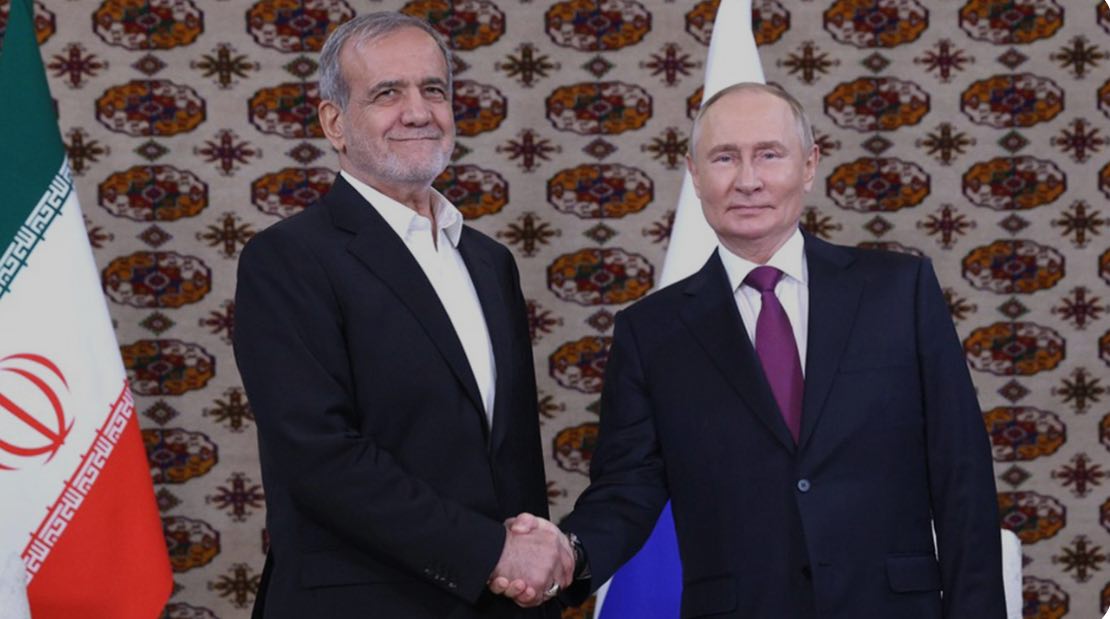
Russia also participates in meetings with regional governments, including Turkmenistan, Uzbekistan, and Iran, getting closer to them.
This policy seems contradictory, a set of decisions that can rarely be described as strategy. However, a closer look shows that Russia is simultaneously building a significant force while pretending to be harmless and confused.
Engagement with Central Asia has long been important for Russia’s regional strategy, and now in arming regional governments, Russia’s goals regarding Iran are unknown.
Alongside guarantees to defend Iran against the West, this creates a strategy that is dangerous for Russia’s enemies. A large part of the reason is the lack of awareness of its actions.
This also indicates that what Russia might be preparing itself for a hypothetical future with Iran, is clearly creating a defensive border in Central Asia. Iran is one of the most powerful forces in the region south of Russia, but any attack by a major power, if successful, would drag Iran northward towards Russia’s border.
Russia has very few interests with Iran to retreat to its defensive border, but it does not want to attack Iran either. Apparently, Russia’s real goal is to contain Iran.
If so, my concerns about Russia have been misplaced.
The point is that I do not know what is correct because Russia’s strategy regarding Iran is largely unclear, like its goals for a defensive border in Central Asia, which worries Iran or at least places it in a state of uncertainty.