
The beginning of a new chapter in Iranian politics
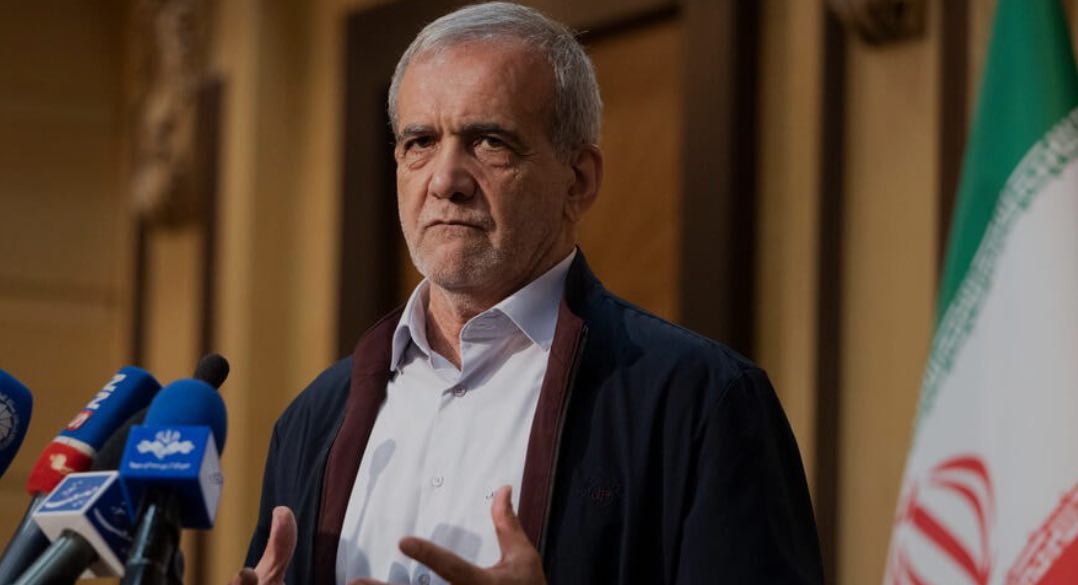
The beginning of a new chapter in Iranian politics was marked by the revolutionary parliament’s vote of confidence for all the proposed cabinet members by Masoud Pezeshkian, an important event that few predicted. This vote of confidence came in the shadow of Pezeshkian’s speech in parliament and the discussion about his statements regarding full coordination with various pillars of the system, and its meaning was not well attended to.
Nevertheless, the vote of confidence for Mohammad Reza Zafarqandi, Ahmad Meidari, and Farzaneh Sadegh Malvajerd contains hidden meanings that need to be scrutinized.
The formation of a national consensus government signifies an important event and transformation in the country’s social and political relations that should not be overlooked.
Ignoring this change can distance us in analyzing political relations and providing appropriate solutions for the country’s issues. But what are the signs of this change and transformation?
Moving past the conflicts created in the sixth parliament
The letter of the chalice of poison by the sixth parliament representatives and their sit-in in the parliament has been one of the topics that cast a shadow over the country’s political relations for the past two decades.
The signatories of that letter and those who participated in that sit-in were practically sidelined from official and executive relations in the country, and even if they changed their minds, they still faced a difficult path to enter the country’s executive structure.
But now the parliament’s vote of confidence for Ahmad Meidari shows that those conflicts have faded and perhaps been resolved.
Moving past this conflict after two decades could mark the end of one of the significant political rifts in the country, which had emerged between political forces loyal to the revolution and the Islamic Republic.
A step towards healing the rift resulting from the events of 2009
The protests of 2009 were one of the significant political turning points in the past four decades. After those protests, the political relations between forces loyal to the revolution and the system underwent a profound transformation.
Many of those protesters, including figures who had made sacrifices in the early years of the revolution, were imprisoned. Figures like Seyyed Mohammad Khatami were restricted, and the leaders of the protests have now been under house arrest for about 14 years.
On the other hand, the political system also suffered many damages following those protests. Those protests created one of the most significant political rifts in the country and became a wound that had not been healed before Masoud Pezeshkian’s government.
Despite the efforts made in Hassan Rouhani’s government to heal this wound, due to the situation and conflicts that government faced, those efforts also failed. However, now the revolutionary parliament’s vote of confidence for Mohammad Reza Zafarqandi, someone who has openly criticized the house arrest of the 2009 protest leaders and stood firm on his positions, has important meaning and shows that the old wound is gradually healing, and new possibilities for bridging the gap between the protesters of that year and the political system have emerged.
Although this rift will not be completely filled as long as the house arrest continues, Zafarqandi’s presence in the government, whose image was also published in the Imam Khomeini Hosseiniyeh, can be a symbol of reducing the rift resulting from that era. The events and happenings of the coming months and years will show how much this movement will continue.
The presence of women in the cabinet towards healing the gender gap
The presence of Farzaneh Sadegh Malvajerd in Masoud Pezeshkian’s cabinet is an important phenomenon that should not be easily overlooked.
Before that, only in Ahmadinejad’s government had a woman managed to become a minister, and it is said that even Hassan Rouhani was unable to use women in ministerial positions, a matter that led to many women’s protests.
However, rumors were heard that Masoud Pezeshkian’s government could introduce up to two women as ministers to the parliament.
Although it is unclear whether these rumors were true or not, the uncontroversial ministry of Farzaneh Sadegh Malvajerd, even in an infrastructural ministry, can be interpreted as a step towards reducing gender inequality in the country.
Although the gender gap is not solved by a woman’s ministry, Malvajerd’s ministry has a symbolic meaning and shows that the country’s political structure has found acceptance in utilizing the capacities of capable women.
Meanwhile, at the time of writing this text, rumors have been published that a woman will also be the government’s spokesperson, and Pezeshkian’s government will be the first to have a female spokesperson. This appointment also reinforces that symbolic meaning.
The presence of Sunnis in the cabinet
According to news and rumors heard these days, it seems that Masoud Pezeshkian’s cabinet will, for the first time in the country, welcome a Sunni member, and one of the vice-presidents will be from the country’s Sunni community.
The presence in the cabinet as a minister or vice-president has been one of the demands of the country’s Sunnis, which has been repeatedly expressed by them since Hassan Rouhani’s government.
This demand is now being realized in Masoud Pezeshkian’s government, and for the first time, a Sunni will join the cabinet, a symbolic phenomenon that could be a step towards healing the rift with the Sunnis in the country.
The gap between the official structure and the Sunnis, which has intensified since the protests of 2022, has many consequences for the country, and this action and the employment of Sunni forces in the position of vice-president can be a sign towards reducing this gap.
Each of the above points has important social and political meaning and signifies a significant change and transformation in the country’s political relations.
If before Masoud Pezeshkian’s government there was a kind of resistance against resolving social and political rifts, now with the confidence given to Masoud Pezeshkian, a change in approach to dealing with the existing political and social gaps in the country is observed. Interaction and trust, if sustained, can be the groundwork for solving many of the country’s problems.
The importance of this change in approach is precisely where it shows itself that it has been done in coordination with various pillars of the system, including the leadership.
From this perspective, it is precisely necessary to pay attention to Pezeshkian’s statements regarding full coordination with the leadership. The value of these transformations lies here, where these changes are also approved by various institutions of the system. This change in approach will lead to an increase in the social capital of the political system because some social and political groups that felt excluded from the country’s political equations now see themselves as part of the structure, and this helps to restore the social capital of the political system.
When social groups feel recognized within the country’s political structure, they will be more aligned and sympathetic with the decisions of this political structure.
What was observed before Masoud Pezeshkian’s government within the framework of purification was a continuous effort to eliminate and exclude various political and social groups.
But now a new approach is observed that instead of elimination and exclusion, it strives for the integration of these groups, a matter from which everyone will benefit.
Of course, this reality should not be denied that there are still various social and political groups that feel they do not have a place in official relations and that their views and positions are not heard. It should not be assumed that the integration process has ended, but rather it has just begun.
However, the very fact that the previous elimination process has turned into a process of integrating political and social groups, women, and Sunnis indicates the beginning of a new chapter in Iranian politics. This new chapter also shows itself in online data. The analysis of Twitter data after the parliament’s vote of confidence for Pezeshkian’s cabinet indicates a significant transformation in political relations, where neo-principlists are alongside moderate and reformist forces, and a wide range of moderate forces from critical and progressive reformists to moderate conservatives and principlists have come together.
Of course, this new condition has its own characteristics that need to be understood more. Essentially, it cannot yet be said with certainty whether this new condition is merely temporary or will continue, as many factors affect its cessation or continuation.
The question of why this new policy has now begun, why Rouhani’s government, especially his second government, was unsuccessful in pursuing this policy and reducing conflicts, and how this approach can continue requires a lot of discussions that need to be addressed among political and social groups.
The continuation of this approach requires constructive interaction among all parties. The effort to solve issues and create consensus now needs to be on the agenda not only in the government and political system but also in civil society, parties, and social groups.