

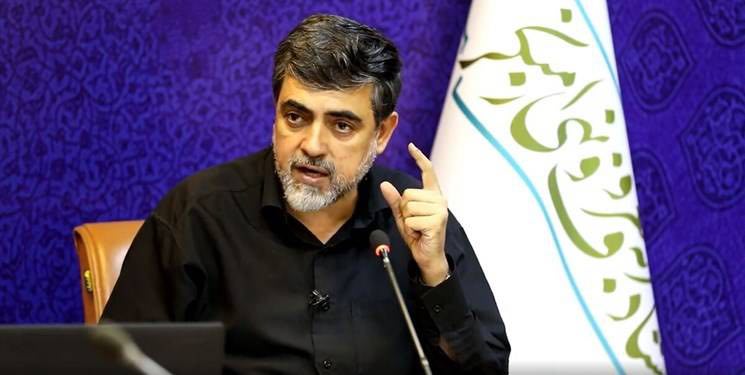
One Step Away from Fencing the Streets: Everything About Hashemi Golpayegani
We are one step away from fencing the streets. There’s little left for Hassan Rouhani’s prediction to come true. In 2013, amid the electoral competition, he warned that they want to fence the sidewalks. Later, his rivals repeatedly mocked him for this statement, claiming he said it to eliminate rivals and scare the people. But a year after the arrival of a government aligned with the conservatives and the consolidation of power, we are gradually getting closer to that warning.
The controversial statements of the new secretary of the Headquarters for Enjoining Good and Forbidding Wrong have coincided with this institution’s policy-making in the fields of hijab and gender segregation, along with intensified security and law enforcement actions in this area, and the alignment and support of other branches of power, conservative political figures, and responsible and non-responsible officials with this policy.
The Selector of Imam Sadegh
But who is Mohammad Saleh Hashemi Golpayegani, whose arrival has intensified actions and policies in this area to this extent? He is an Imam Sadeghi. The entry of Imam Sadegh University graduates into the country’s managerial and political structure began with Ahmadinejad’s government, almost stopped with Rouhani’s arrival, but has now reached its peak under Raisi’s government.
Hashemi Golpayegani was born in 1967 in Tehran. He studied philosophy and theology at Imam Sadegh University and became a faculty member there. With the decree of Mahdavi Kani, he established the selection unit of Imam Sadegh University and was responsible for this unit until 2010, an experience completely relevant and aligned with his current mission at the Headquarters for Enjoining Good and Forbidding Wrong.
Female students of Imam Sadegh University tell very strange stories about the strict and complex security selection system of this university, not only during registration and admission but also in monitoring and observing the appearance and thoughts of students throughout their academic period.
Kazem Sedighi, the head of the Headquarters for Enjoining Good and Forbidding Wrong, in a decree issued for Hashemi Golpayegani on May 24 of last year, stated: Considering the need for transformation in the Headquarters for Enjoining Good and Forbidding Wrong in line with the expectations of the Supreme Leader and the goals outlined in the statement of the second step of the Islamic Revolution, and with regard to your knowledge, insight, valuable experiences, revolutionary and jihadist spirit, and transformative management, I appoint you as the secretary of the Headquarters for Enjoining Good and Forbidding Wrong from May 24, maintaining your position, for three years.
Instead of Fencing, We Separate the Classes
The traces of his presidency over the selection unit of Imam Sadegh University and the prevailing atmosphere of this institution can be seen in his statements. To the extent that in one of his latest comments, he said, for example, when asked why students are segregated by gender before reaching puberty and become mixed when they go to university, I have no answer. We have gender segregation in the first grade, but when we reach the age of 18, at the peak of gender issues, we have mixing.
I believe that bringing gender issues into the educational environment causes scientific and spiritual harm. How can you build walls in classes? But what’s wrong if, for example, a university with two buildings writes in this year’s entrance exam booklet that one university is only for boys and one only for girls? Families welcome gender segregation. Families want a safe environment. 21 universities and colleges have gender segregation in the world, and even some universities in the United States have become gender-segregated.
Fine the Poorly Veiled, Arrest the Celebrities
Hashemi Golpayegani does not have much faith in cultural work in the field of hijab but believes in operational work. He has said that in the headquarters’ chastity and hijab plan, the poorly veiled is no longer a criminal but an offender, and instead of case-making and punishments prescribed by law, the person is fined. The poorly veiled are identified in public places like the metro with cameras, and an impactful fine is sent to them.
Or he said, ‘How does the Fajr Festival resemble a revolution festival? These celebrities who, if they were on the street, the morality police would warn them, well, the police should show authority and arrest them at the same Fajr Festival. The offspring who come from abroad and do not adhere to the dress code, the morality police should deal with them too, so people see there is no difference between individuals.’
Mobilizing Supporters
But the main idea he pursues is that some merely by lamenting the vices and lamenting the state of society lead to a sense of despair and instill weakness. We must carry out operational work based on a program to improve the hijab situation. He has probably realized that the failed idea of the morality police cannot control the entire society. That’s why his idea is to mobilize ideological supporters and defend them with all their might.
He has said that in this plan, there is no physical confrontation, and the law enforcement does not directly deal with the poorly veiled, and no tension or conflict occurs. This plan is entirely popular and responds to the legitimate demands of the people and the families of martyrs.
A Protective Umbrella over the Enjoiners
Narratives also indicate that support for the enjoiners of good or those who, voluntarily or involuntarily, feel obliged to admonish citizens and, beyond that, engage with them has increased during Hashemi Golpayegani’s tenure with judicial support. Only a few recent media-reported cases confirm this trend.
1. Mostafavi Passage in Shiraz: Two protesting women in Shiraz who were admonished about hijab by two martyr sisters were arrested. Media reported that these two women engaged and insulted and beat those sisters. The two sisters were appreciated and consoled, and the place of the incident, Mostafavi Passage in Shiraz, was sealed.
2. Sepideh Rashno, a BRT bus passenger who was admonished about hijab by Reyhaneh Rabii and had filmed her, was arrested and faced heavy charges. She was released after 40 days with an 800 million toman bail.
3. A female teacher who admonished other women about hijab on a train was introduced by the Headquarters for Enjoining Good and Forbidding Wrong as the national ambassador of the explanatory jihad plan for chastity and hijab and was appreciated in a ceremony. The train driver who told that woman, ‘Who are you?’ was reprimanded and suspended from work. It was also claimed that this teacher was beaten.
The Law Supporting Enjoiners of Good and Forbidders of Wrong was passed in 2015 in the Ninth Parliament. This law states that no person or group has the right to commit criminal acts such as insult, slander, assault, and murder under the pretext of enjoining good and forbidding wrong.
Individuals or legal entities do not have the right to create obstacles to the implementation of enjoining good and forbidding wrong. Creating any type of obstacle and disturbance, which is recognized as a crime by law, in addition to the prescribed punishment, results in a conviction of imprisonment or a seventh-degree fine. Enjoiners of good and forbidders of wrong are subject to judicial support under Article 4 of the Law on Judicial Support for the Basij, approved in 1992 by the Islamic Consultative Assembly.