

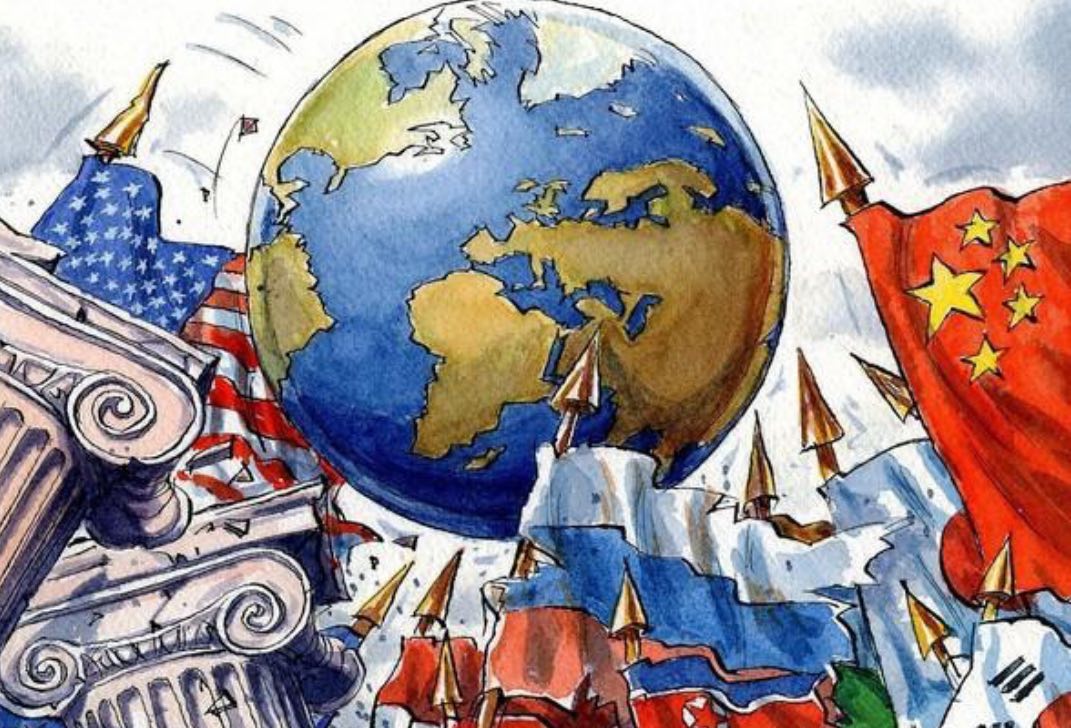
The necessity of balance in foreign policy
In recent months, the necessity of balance in foreign policy has become a significant topic in some political circles. This discussion has intensified due to the accusations of joint cooperation between the Islamic Republic of Iran and Russia in the Ukraine war, and the alignment of China and Russia with the Gulf Arabs on territorial integrity issues, as well as the audacity of some countries towards Iran. Therefore, it is appropriate to examine the dimensions of this topic more closely.
The reality is that the concept of balanced foreign policy is ambiguous for some diplomats, and some have exclusively equated it with establishing peaceful relations with the United States and the West. However, balanced foreign policy, especially for a country with Iran’s unique geographical and political characteristics, encompasses broad, deep, and complex meanings that have not received sufficient attention from diplomats. It is evident that ambiguity in this matter cannot aid in formulating strategies aligned with reality in foreign policy.
Fundamentally, balance and equilibrium are undeniable in international relations, focusing on various diverse aspects of foreign relations and the driving forces of changes in the international environment, shaping interests therein. It is reminded that foreign policy is an inseparable whole. The policy of international changes and relations consists of components and entities, and the success condition in formulating a balanced foreign policy is having a balanced and equitable view of all its constituent parts.
This is a governing empirical principle in foreign relations in the international environment. Ignoring this principle is merely an illusion, inevitably leading to missed opportunities and the loss of national assets in geopolitical competitions with foreigners.
The developments of the last three decades at the international level indicate that not only has the world passed the unipolar era and entered multipolar relations, but new political, economic, and military alliances have emerged, establishing a new balance between small and medium powers on one side and major global powers on the other. Major and emerging powers have moved beyond their traditional and peripheral domains, seeking new regions worldwide and extending their influence over a broader radius.
Countries in a multipolar world and a power distribution situation have discovered new economic, political, and cultural capacities, creating a new balance in politics and international relations. For example, Europe has formed new capacities in international relations by establishing transatlantic ties and relations with South America, the Mediterranean region, the Middle East, Asia, and Central Asia within comprehensive organizations. India has formed new economic domains with the Gulf countries, Central Asia, and the Caucasus, accelerating the power distribution.
This country, focusing on the scientific and digital capabilities of the United States, has implemented various plans, including ICET, utilizing these capabilities and new capacities for development. Turkey has established organized relations in various fields with African and Arab countries and recently in the Ukraine issue. Russia has practiced new forms of power in the Mediterranean and used existing opportunities based on a multipolar order in the Gulf region and other parts of the world.
The Gulf countries have formed unprecedented economic ties and new connections with China, sharing their economic capacities while maintaining strategic relations with the West and the United States with the major Eastern power. The southern Gulf countries, emerging from the former bipolar and unipolar order, have strengthened the principle of shared interests and economic interdependence, forming new coalitions and transnational economic power, gaining unprecedented influence in the regional power circuit and experiencing new roles and presence in the United Nations and the General Assembly.
China, by employing the economic and commercial capacities of the United States and Europe and offering productive plans for shared interests with Africa, Asia, and Latin America, has taken significant steps to create effective competition with the United States. Recently, in collective alliances with the Gulf countries, China is trying to enter the traditional American sphere of influence and strengthen its competition with the United States.
The United States, the United Kingdom, and Australia, in close competition with Europe, have designed and implemented the new AUKUS pact against China’s expanding influence. These and other prominent examples indicate the formation of new relations at the regional and global levels, with the most significant manifestation being the emergence of a new balance in the world based on multipolar relations and the distribution of power and comprehensive capacities.
The first and most important central point in the new developments is that in this multipolar world, all countries, to preserve their interests, employ the element of positive balance between different and even opposing phenomena and factions of power, thereby expanding their sphere of influence and benefiting from new capacities at the international and regional levels. No country in the new multipolar relations can be found that confines itself to a specific pole and political space, thus depriving itself of new capacities released by the multipolar system while achieving foreign policy goals.
The prerequisite for political survival in a multipolar system is the ability to create positive balance and political traction to all aspects as an unbreakable strategy. On the other hand, the success of the positive balance strategy requires strengthening the country’s historical, cultural, economic, military, and political advantages to possess a high degree of deterrence power to create balance with other players. Otherwise, not only will positive balance not be established, but conditions will shift towards surrendering to foreign demands. As mentioned, this strategy should aim to preserve the country’s national interests based on balance in benefits on one side and maintain sovereignty and territorial integrity and achieve the fundamental principles of a nation on the other.
Positive balance in a multipolar world does not contradict having strategic relations with allies. Strategic relations with some countries can, in turn, strengthen positive balance and make it more effective. However, it must be noted that strategic relations with countries or groups of countries have specific legal, political, and economic definitions and characteristics that require special conditions to access.
For example, Iran, in its current situation, has not been able to establish strategic relations with a country or a group of countries, even its close neighbors, as it should. This is because Iran’s current situation and foreign policy orientation on one side and the foreign policy inconsistency of surrounding countries with Iran and their shared interests with Iran’s rivals and enemies do not currently allow for this.
Therefore, not only must the positive balance strategy in foreign policy be further strengthened, but ways must be sought to compensate for the lack of strategic relations with countries. The most effective way in this situation is to focus on identifying the components of power and areas of power production in the world, which should be achieved by moving beyond static situation calculations and paying attention to the dynamics of international developments.
On the other hand, and from a historical perspective, strategic solitude can naturally be one of Iran’s significant challenges in international relations. This solitude has created difficult and complex conditions for Iran and incurred costs. Experience has shown that the way to confront challenges and threats arising from strategic solitude is to adjust a balanced foreign policy. Unfortunately, due to the clichéd nature of thought in the country’s diplomatic environment, vague and sometimes incorrect perceptions of balanced foreign policy have formed, resulting in flawed and erroneous decision-making processes.
Some think that balanced foreign policy exclusively means reviving relations with the United States and the West, while this is not the case. The driving forces and components of power in the international environment are currently multifaceted, complex, and diverse. Therefore, the scope of balanced foreign policy discussion extends far beyond the necessity of establishing relations with the Western world. In the current international system, there are numerous opportunities for national growth and development, and the condition for exploiting them is to create balance in utilizing power production areas.
In other words, the first step towards establishing balance in international relations, both qualitatively and quantitatively, is the necessity of evaluating the existing order as a significant opportunity. It is evident that an opportunistic view of the existing order does not mean the absence of threats in this order, but addressing threats in the international environment also depends on variables that attention to can facilitate the achievement of goals. In this discussion, an attempt is made to outline the indicators of balanced foreign policy based on the multifaceted nature of power components and diverse power production areas, but it is appropriate to refer to some principles and influential elements in achieving balanced foreign policy before presenting the indicators.
1. The principle of inseparability
As mentioned at the beginning of the note, the various aspects and elements in international relations and, by extension, foreign policy are an inseparable whole. International relations have various and diverse components and dimensions, and the first condition in pursuing balanced foreign policy is having a balanced view of all components and understanding the importance of their role in this whole.
The first aspect of the principle of inseparability is the internal connection and mutual influences of political concepts and phenomena in international relations. The driving forces inherently in power, influence, security, deterrence, development, interest, and balance continuously have mutual influences on each other. Influence in the realm of global goods and shared needs in the international environment is synonymous with development, and development is an inseparable part of power and is closely related to security. All these concepts and elements, individually and collectively, produce deterrence to protect interests and counter threats.
An important point in the principle of inseparability is that falling behind in the development domain quickly reflects in the security domain and manifests as geopolitical threats. For example, extensive growth and development on the Arab shores of the Persian Gulf and, conversely, the lagging behind of the Iranian shores of this water region amount to growing geopolitical threats against Iran.
Fundamentally, foreign policy has missions in three domains: security, development, and values. Without a doubt, a country’s diplomacy is successful if it has a balanced view of all foreign policy missions. Regarding Iran’s foreign policy, it should be said that just as the mission to ensure the country’s and citizens’ security and advance values is important, achieving development is also an inseparable part of foreign relations and a necessary condition for achieving foreign policy goals.
Development in the country’s foreign relations is not merely a national and governmental commitment to enhance the country’s economic and social status and the welfare of citizens. The mission for development is not a tactical choice or a necessity; rather, it is an essential and one of the decisive tools in geopolitical competition with foreigners to safeguard national interests.
The second aspect of this principle of inseparability is international developments. The behaviors of actors in the international environment form in a causation relationship. The notion of isolated actions in the existing international system is certainly naive. The components in this system are so intertwined that one can never calculate global political events, decisions, behaviors, and actions, whether in the process or the result, without dependency, connection, and mutual influence on each other.
In other words, although the scope of international relations is composed of different and conflicting interests between countries and geographical regions, intergovernmental and global actions and relations occur in a single, inseparable environment. The movements of countries and political coalitions have internal dependencies and connections and are certainly influential on each other in both the process and the result.
Therefore, in the existing global order, bilateral relations cannot be separated from regional multilateral relations and regional organizations. Likewise, bilateral and regional relations cannot be separated from international relations and developments in international organizations. All these relations, in their effects and consequences, are in an inseparable global network.
Inseparability in international relations, especially the inseparability of threats, occurs both in level and depth, and both directions ultimately converge at a point. The inseparability of threats at the level indicates a situation where states, in the course of geopolitical competition and in response to rival development, horizontally direct threats towards their rival outside their borders using all foreign policy, defense, economic, and security tools at the appropriate place and time.
The inseparability of threats in depth indicates developments where international actors conduct threats within borders, within populations, and inside rival countries. The efforts of enemies to create negative perceptions and national humiliation and ultimately disintegrate rival countries are examples of this type of vertical threat.
An important point is that all these developments, both at the level and in depth, occur in a causation relationship and in an interconnected network. For example, one cannot imagine political behavior in an incident in the West without affecting the East or vice versa. In other words, if country A takes action on a front in the north against its rival or enemy, it must expect a similar or different action in the south from country B against itself at both the level and in depth.
An important point is that if country A considers its action isolated or is not prepared for confrontation in the south with country B and its rival, it will undoubtedly be the loser in political, defense, security, economic, and cultural interactions at the regional and international level. This means that the acting country at point A in political, defense, and security domains against its rival or enemy must certainly be prepared for confrontation with its rival or enemy at point B.
Conversely, the acting country at point A must know that failing to de-escalate at this point, especially in the absence of readiness for a comprehensive response to rival threats at point B, will certainly endanger achieving national development goals and even its own existence.
In other words, the country in question must make this calculation before any action: Is confrontation and striking the enemy at point A commensurate with its deterrence power to prevent the enemy from creating balance at point B? Because if confrontation with the enemy on one side is not commensurate with its own deterrence power on the other, the country in question will certainly suffer serious and strategic damage at both points according to the principle of inseparability. It is now appropriate to refer to the components of deterrence power. Undoubtedly, military power in terms of forces and equipment is one of the most important components of deterrence.
However, this is not limited to the military component, and certainly, other elements such as the country’s international standing, the power of political alliances with other countries, economic power, media authority, public and cultural diplomacy abroad, and internal cohesion and consensus play a decisive role in deterrence power. Therefore, it is once again emphasized that confrontation at one point without having deterrence power at another point is synonymous with increasing weakness and continuous erosion of national interests.
What is currently observed in the general Caucasus region, Turkey, Azerbaijan, and some neighboring countries, including Pakistan and Afghanistan, as well as from the behaviors of Russia, India, and other actors, is just an example of the reflection of the mentioned principles. Therefore, the first result of attention to the principle of inseparability in the international environment is the necessity of formulating intelligent and balanced diplomacy through analyzing and calculating international and regional political events and movements within the broader circle of the global network and all-encompassing interconnected elements with mutual influence in this environment.
Intelligent diplomacy in the process of diplomatic movements sees all influential elements and components and reciprocal interactions together in a global, international, and regional frame. Therefore, with this comprehensive view, one-sidedness and sectionalism in international relations are deadly poisons and destroyers of national interests.
2. The guarantor and regulator authority
The presence and influence abroad and the effort to create the desired order or security arrangements and the political horizon boundaries at the regional and global levels must be commensurate with the level of regulatory authority and the guarantor power of foreign presence and influence as the support for its continuous preservation. Otherwise, defensive and security achievements will also be lost in a foreseeable period. For example, after World War II, the United States created the international order it desired in the surrounding region of Europe and even Asia.
The United States, to maintain its desired order in Europe as the guarantor of order, implemented the Marshall Plan with its economic power, and in Japan, it acted similarly for such an arrangement. Russia, after the Soviet Union, also maintained some major countries and its influence during the Soviet era with its power as the guarantor of the new order under the name of the Collective Security Treaty Organization (CSTO) in its surrounding environment.
In recent years, Iran, Russia, and Turkey have signed agreements on security arrangements in some areas in Syria as the guarantor of those arrangements and have protected their desired order as the determining powers on the ground. France, in the years after the independence of African countries, tried to create its desired order in some areas of the black continent and pursued its interests using its comprehensive authority as the protector and guarantor of order.
These and many other examples show that countries that create regional and global order or take action for foreign presence and influence must necessarily possess the necessary authority as the guarantor and regulator country in military, economic, and cultural domains and create the necessary structures in future processes to guard and protect foreign presence and influence and their desired order and ultimately maintain the results and achievements and their short-term and long-term interests.
It is evident that if a country cannot create a real balance between its authority as the guarantor and regulatory actor on one side and the scope of foreign presence and influence and its international political horizon on the other, it will certainly incur significant costs in the long term and sometimes endanger its achievements and expose itself to numerous threats.
3. The principle of comprehensive deterrence
The principle of deterrence in its comprehensive concept and the deterrent authority of countries is one of the elements that can determine the degree of success of countries in achieving their foreign policy goals. In other words, the quality and scope of activities and the radius of foreign presence and influence in foreign and defense policy must necessarily be commensurate with the comprehensive deterrence power of the country in question. That is, countries, in determining strategic confrontation points and their external confrontation with their rivals and enemies and in designing their interests and foreign plans, must pay attention to their deterrent authority. The greater the deterrent authority, the more power there is to create balance and equilibrium in foreign relations and thus preserve national interests in foreign policy.
A country that takes action for a secure economic and security belt and to preserve its interests by foreign presence and influence and creates its desired order around itself must have the necessary deterrent power in defense, economic, political, and cultural domains to neutralize enemy activities or attacks in the aforementioned fields and be able to disable their advancement machine with its deterrent authority in the surrounding environment.
For example, one aspect of comprehensive deterrence power is the sharing and interweaving of economic and political interests, convergence, and alignment of economic tendencies in the surrounding environment and with influential economic powers. This sharing of interests must be so strong and extensive that the rival or enemy in the geopolitical arena cannot easily and costlessly implement its disruptive plans. The security doctrine and political plans of countries must be designed in a way that can be supported by deterrent authority; otherwise, the implementation of political plans and security arrangements will face failure and impose significant and sometimes irreparable costs on them.
4. The principle of fluidity of interests and the necessity of establishing balance and equilibrium among them
Principles and interests are two different concepts. Principles are fixed, but interests are fluid. Interests are shapeless; the shape and content of interests are determined by political arrangements and on-the-ground developments. For example, the shape and content of interests during the dominance of ISIS and terrorism in Iraq and Syria differ from the post-ISIS era. During ISIS, the interest was in fighting ISIS and military mechanisms and strategies, but in the post-ISIS era, the interest is in presence and influence in reconstruction processes, expanding political connections with rivals in this process, and economic strategies.
Before Russia’s invasion of Ukraine, for some European countries like Germany, expanding relations, especially economic relations with Russia and the Nord Stream gas contract, was considered beneficial. However, after the Russian attack, the interest changed direction, and many contracts, especially Nord Stream, went into oblivion. For some countries, joining NATO was not considered beneficial, but after the war, joining NATO was considered beneficial.
Saudi Arabia’s interest during the absolute hegemony of the United States and during the bipolar era was to be in the orbit of Washington. However, this country, after the transformation in the international order and the rise of emerging countries and the powerful emergence of China in global geopolitics and the security changes of the United States in the region and the change in the political arrangement of the world, defined new interests in its foreign policy that are completely different from previous eras. Even Putin, in various political periods and stages over the past 25 years, has designed and implemented different and even diverse interests in relation to the Western world.
Therefore, an efficient government in the field of foreign policy necessarily pursues the fluidity of interests as a practical and conventional principle. Therefore, the principle of fluidity of interests requires foreign policy to identify real interests in different periods and achieve them with tools compatible with changes. In the second stage, the duty of foreign policy and practical diplomacy is to establish balance and equilibrium in various domains of security, economy, and values. Diplomacy in different situations must calculate the average and outcome of the desired interests.
In other words, if in foreign policy one or several interests are continuously considered superior to other interests, national goals will not be achieved, and it may even damage the economy, culture, and development of the country. For example, the main countries of the European Union and mainly European countries have defined multiple interests such as preserving and strengthening international human rights, promoting democracy, economic interests, military presence and protection of security arrangements, preserving and expanding bilateral and multilateral relations, strengthening geopolitical presence in the region and the world, and combating terrorism in their foreign and defense policy.
On the other hand, statements, declarations, documents, and analyses of some of them indicate that they are not willing, except in special and exceptional circumstances, to sacrifice one interest if it harms the overall national interest for another interest. For example, the Netherlands, which is among the most famous in the world for adhering to international human rights, is not willing to forgo its national economic interests and strategic relations with countries for the sake of protecting human rights in its beliefs, which are akin to divine revelation for them.
In other words, the Netherlands does not want to defend transnational human rights at the cost of undermining its other strategic interests at the international level. It should be noted that each country designs its interests and various aspects and manifestations based on its fundamental principles, but in any case, a pillar of success in foreign policy, in general, is the necessity of creating balance and equilibrium between different national interests in the implementation of political plans.