

What is the Libya model?
What is the Libya model?
The agreement between Libya and the West, which has been 22 years since, has once again become a topic of discussion on the eve of negotiations between Iran and the United States regarding the nuclear program of the Islamic Republic. Libya has become a bad example and cannot convince other countries, such as Iran and North Korea, to follow its path. This was said by Muammar Gaddafi, the leader of Libya, in an interview with CNN in 2005, without knowing what fate awaited him. At that time, about two years had passed since his agreement with the United States and Britain, but because he had not benefited from the advantages of the agreement, he was very dissatisfied with the West. However, shortly after, the United States removed Libya from the list of countries supporting terrorism and resumed diplomatic relations with this country.
22 years have passed since this agreement, but the fate of the Libya model is still a hot topic in international forums. Now that Iran and the United States are on the verge of talks for a possible agreement regarding Iran’s nuclear program, some in Iran are warning about using this model for Iran, and some politicians are proposing it for an agreement with Tehran.
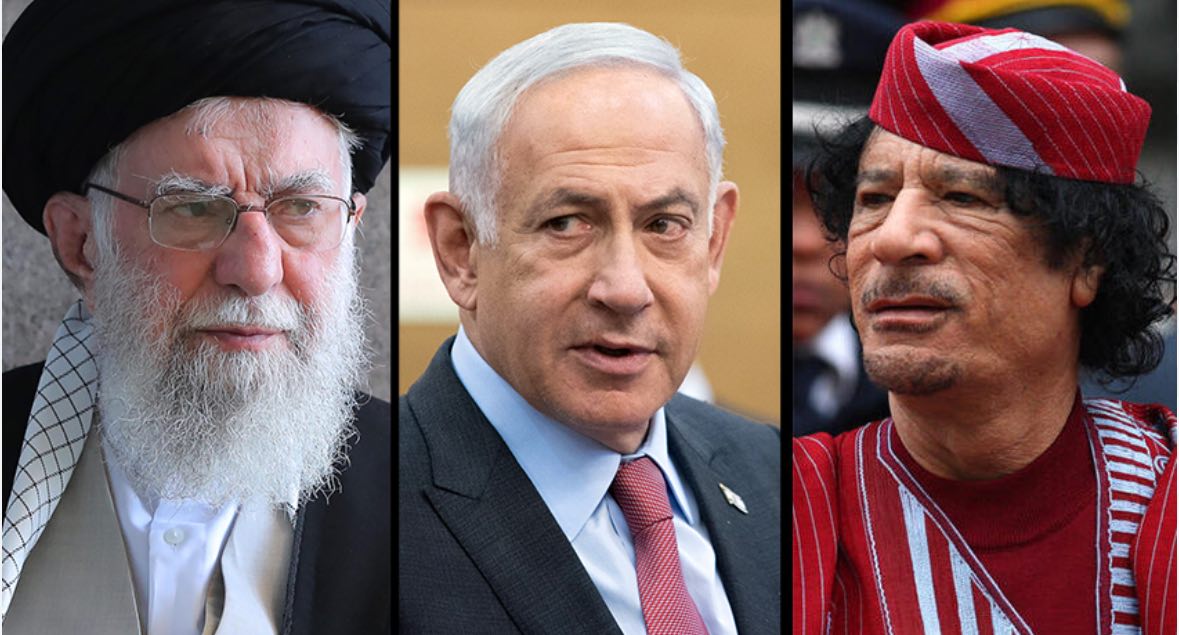
Among them is Benjamin Netanyahu, the Prime Minister of Israel. Mr. Netanyahu, who according to Israeli media reports was surprised by the news of the planned meeting between Iranian and American officials on April 18, said in a video message before leaving Washington that an agreement with Iran can only be reached if it is similar to the Libya model. Meanwhile, Abbas Araghchi, the Iranian Foreign Minister, in response to the statements of an American senator who preferred the Libya model agreement with Iran, said, ‘They can only see it in their dreams.’
What is the Libya model?
The United States and Britain had been negotiating with Libya for some time to limit the country’s nuclear program and the production of weapons of mass destruction. This program began in the 1970s and had many ups and downs. Libya signed the NPT non-proliferation treaty in 1975 and the Biological Weapons Convention in 1982, but was always suspected of trying to produce these weapons. The narratives of Western diplomats about which country, Britain or the United States, started these negotiations are contradictory.
However, these narratives do not change the outcome of the negotiations.
Under the leadership of Muammar Gaddafi, Libya accepted in 2003 to denuclearize, hand over its chemical weapons stockpiles, and limit the range of its missiles to below 300 kilometers.
Within the framework of this agreement, Libya not only allowed American and British inspectors to enter the facilities, but also accepted the Chemical Weapons Convention and the Comprehensive Nuclear-Test-Ban Treaty.
Since then, activities in the field of facility inspections have begun, led by the International Atomic Energy Agency and American and British specialists, and a large part of the equipment and related documents of Libya’s nuclear program were transferred to the Oak Ridge National Laboratory in Tennessee.
The removal of nuclear materials and chemical weapons produced by this country continued for years, and the last stage of it was completed after the overthrow of Muammar Gaddafi.
And of course, in this process, contrary to what Benjamin Netanyahu, the Prime Minister of Israel, says, no facilities were blown up.
Why did Libya accept this model?
At the time of announcing the agreement with Libya in 2003, some American and British officials who spoke to reporters mentioned that the country’s nuclear program was close to producing nuclear weapons. However, in the following years, after examining various aspects of this program, some analysts concluded that Libya’s distance from the bomb was much greater than previously thought.
Malfrid Braut-Hegghammer, a Norwegian researcher in the field of non-proliferation who has also written a book on the subject, said in a lecture at the Woodrow Wilson Center in 2017 that even Libyan officials, including Saif al-Islam, the son of Muammar Gaddafi, had similar perceptions to Western officials and thought they were about five years away from acquiring a nuclear bomb.
In addition to the issue of Libya’s distance from the nuclear bomb, two other motivations are also mentioned for this country accepting this agreement: the pressure of widespread sanctions that crippled Libya’s economy and the US military attack on Iraq a few months before reaching the agreement. However, analysts do not agree on the extent of the impact of these two factors.
The Libyan government at the time of announcing the agreement said it accepted this agreement of its own free will.
However, George W. Bush, the then President of the United States, said, ‘We have made the options clear to our enemies in words and actions.’
When leaders make smart and responsible decisions, abandon terror and weapons of mass destruction, as Colonel Gaddafi did, they work for the benefit of their people and contribute to the security of all nations.
Which Libya model, 2003 or 2011?
John Bolton, in 2018 on the eve of his appointment as National Security Advisor to the White House, in response to a question about the possibility of starting US negotiations with North Korea, said these negotiations would be short and follow the Libya model. Kim Jong-un in Pyongyang was very upset by these words, and Donald Trump said the United States is not seeking such a model for North Korea and ‘he’, the leader of North Korea, will remain there, leading his country, and his country will become very wealthy.
The reference of the President of the United States was to the fate that befell Muammar Gaddafi eight years after Libya’s agreement with the West.
Libya, which was gradually returning to the international community in the years after the agreement, was subjected to events following the protests known as the Arab Spring, which ultimately led to Western countries attacking it, the overthrow of the government, and the killing of Muammar Gaddafi.
Critics accused Mr. Trump of misunderstanding the Libya model and said Mr. Bolton’s reference was to Libya’s denuclearization and had nothing to do with the overthrow of Muammar Gaddafi’s government.
However, many observers in the years after the overthrow of the Libyan government and the killing of Muammar Gaddafi have emphasized that this fate has overshadowed the initial success of the Libya model and cannot be used as a roadmap for other countries, including Iran.